
Ecommerce product discovery: build a catalog that answers
Learn how ecommerce product discovery connects search, navigation, recommendations, and AI. Build the product data system that helps shoppers find and buy.
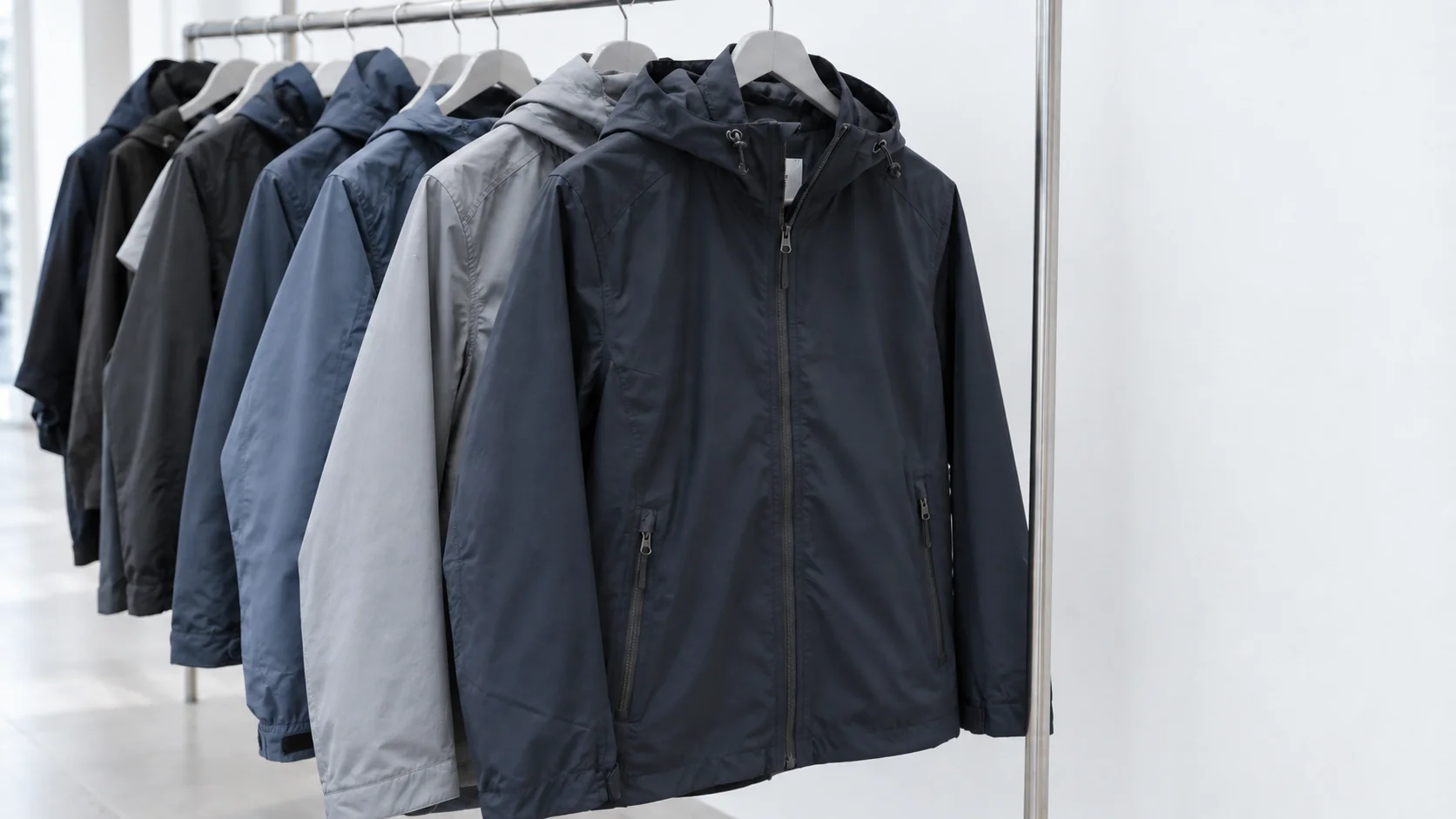
Your shopper may ask for a waterproof commuter backpack under $150, not a product name from your catalog. If your data only knows “backpack,” the right product stays hidden.
Ecommerce product discovery is the system that turns a shopper’s need into a relevant product. It includes search, navigation, filters, recommendations, buying content, and AI shopping surfaces. We help brands build the product data layer behind those experiences, so the same product facts stay structured, current, and available wherever shoppers look.
What ecommerce product discovery means
Ecommerce product discovery is every path a shopper uses to find, compare, and understand products. Search is one path. Browsing a category, following a recommendation, reading a buying guide, or asking an AI assistant are others.
Product search starts with a stated request. Discovery also supports shoppers who know the problem they want to solve but do not know the product or the words your catalog uses. A shopper searching for “SKU 4821” needs retrieval. A shopper asking for “a quiet coffee grinder for a small apartment” needs interpretation, filtering, and explanation.
Each surface has a different job:
| Discovery surface | Shopper’s job | What the system must return |
|---|---|---|
| Site search | Find a named product, category, or attribute | Ranked results that handle identifiers, synonyms, and intent |
| Navigation and collections | Browse a category or use case | A clear hierarchy and a manageable product set |
| Filters and facets | Narrow a broad set | Relevant, current attributes such as size, material, or price |
| Recommendations | Compare, substitute, or complete a purchase | Products connected by context, behavior, or a known relationship |
| Buying content and guided selling | Learn what fits a need | Advice tied to products and their actual attributes |
| AI shopping surfaces | Describe a goal in natural language | A shortlist grounded in machine-readable facts and live offers |
The surfaces work as one journey. A shopper can search, apply a filter, read a product explanation, and then choose an accessory. If each step reads a different product record, the journey contradicts itself.
Why discovery is a product data problem
A polished interface cannot invent a missing product fact. If waterproofing, dimensions, compatibility, or stock status is buried in inconsistent copy, every discovery surface has to guess or omit it.
That is why a product can be present on a site and still be undiscoverable. It may lack a category path, use an unfamiliar synonym, have no filterable attribute, or be joined to the wrong variant. A recommendation model can rank only the relationships it can see. An AI assistant can explain only the facts it can retrieve and trust.
The user experience problem is larger than a search box. Baymard’s 2024 product-finding study spent more than 5,550 hours across 219 usability sessions and documented more than 1,000 medium-to-severe issues across search, navigation, and product lists. The study shows why discovery needs coordinated work across interface, taxonomy, and data.
Research from Amazon describes the same system boundary. Ecommerce search and recommendations involve query matching, ranking, browsing behavior, and the logistics of product data, rather than one isolated algorithm. The SIGIR Forum paper is a useful overview of those connected problems.
Build one product truth for every discovery surface
Your human storefront renders cards, images, filters, and buttons. AI shopping surfaces need typed product objects with stable identity, explicit attributes, and current offer state. Both experiences should come from the same canonical record.
A useful product record includes:
| Data group | Examples | Discovery jobs it supports |
|---|---|---|
| Identity | Product ID, SKU, GTIN, MPN, canonical URL | Joins search, feeds, variants, analytics, and orders |
| Taxonomy | Product type, category path, brand, use case | Navigation, scoped search, collection pages, and reporting |
| Typed attributes | Material, fit, dimensions, ingredients, ports, capacity | Queries, filters, comparisons, recommendations, and explanations |
| Variants | Parent ID, size, color, pack, configuration, variant URL | Sends shoppers to an option they can actually buy |
| Offer state | Price, currency, promotion dates, availability, region, fulfillment | Keeps rankings and answers commercially accurate |
| Relationships | Substitute, compatible, complementary, bundle, successor | Powers recommendations, cross-sells, and guided selling |
| Content and policy | Images, specifications, reviews, shipping, returns, warranty | Helps shoppers evaluate risk and make a decision |
| Provenance | Source, owner, timestamp, confidence, validation status | Makes stale or inferred facts visible before they spread |
The exact fields depend on the category. A laptop needs processor, memory, storage, ports, and operating system. A moisturizer needs ingredients, skin type, scent, volume, and warnings. A sofa needs width, depth, upholstery, seat count, and delivery constraints. A generic title and description cannot carry all of those decisions.
Catalog’s product data guide goes deeper on building a record that can travel from your source systems to feeds, APIs, storefronts, and AI commerce.
How to improve ecommerce product discovery
1. Start with real shopper jobs
Collect search queries, zero-result queries, repeated refinements, support questions, category exits, and questions from sales or store teams. Add campaign and editorial entry points. Group them by the job the shopper is trying to complete:
- find an exact product or identifier;
- compare alternatives;
- satisfy constraints such as size, budget, or compatibility;
- solve a use case;
- complete or maintain an existing purchase.
This turns a vague goal such as “improve search” into testable work. You can ask whether the catalog returns the right product, exposes the right constraint, and explains the match.
2. Make category attributes typed and normalized
Put important facts in fields that systems can query. Use controlled values for color, material, fit, activity, and compatibility. Normalize units and common language, while keeping the canonical value in the product record.
For example, “navy,” “midnight,” and “navy blue” may map to a color family, while “10 in” and “10 inches” may map to one dimension. Record those mappings with an owner and scope. A synonym that helps running shoes may be wrong for hardware.
This is the foundation for better ecommerce filters. A filter only helps when the underlying attribute is present, consistent, and valid for the current result set.
3. Keep identity, variants, and offers together
Stable identifiers prevent duplicate products and broken analytics. Parent-child variant links let a shopper move from a product family to a purchasable size, color, or configuration. Price, availability, delivery promise, and regional eligibility need their own freshness rules because they change faster than descriptive copy.
Google recommends using product structured data on product pages and submitting a feed to Merchant Center. It says feeds give merchants more control over update timing, while crawling is not guaranteed to find every product. Google’s product-data guidance explains how structured data and feeds work together across Google surfaces.
4. Combine exact retrieval with semantic understanding
Exact matching is essential for SKUs, model numbers, brands, and hard specifications. Semantic retrieval helps when a shopper describes a situation in unfamiliar language. A hybrid system can use both, then apply explicit constraints before ranking.
Do not let a plausible semantic match override an unavailable variant or an incompatible component. Relevance comes first, then bounded signals such as availability, delivery, popularity, margin, or a campaign. Keep the reason for a ranking decision visible to the team that operates it.
Our guide to ecommerce site search covers query handling, autocomplete, filters, zero-result recovery, and search measurement in more detail.
5. Design browse and search as connected paths
Some shoppers start with a query. Others use navigation to understand the store. A category page can provide contextual filters, subcategories, buying content, and a product list that a generic search page cannot.
Keep the taxonomy and attributes behind both paths aligned. If “water-resistant” appears as a product attribute but not as a searchable synonym or filter, the shopper gets different answers depending on where they begin.
6. Give every recommendation an intent
“Recommended for you” is too broad to operate well. Define whether a placement helps the shopper find a substitute, add a compatible accessory, replenish a product, compare styles, or explore a category.
Shopify distinguishes related products from complementary products in its recommendation APIs. Related products can serve as substitutes, while complementary products complete the item being considered. Shopify’s documentation also recommends tracking the resulting actions. Use the same distinction in your own relationship data and reporting.
Eligibility comes before ranking. Remove inactive, unavailable, region-ineligible, incompatible, duplicate, or already-purchased products when the placement requires it. Then rank the remaining candidates for the placement’s job. Our practical guide to product recommendations shows how to structure that pipeline.
7. Instrument recovery, not only successful clicks
Discovery failures are useful signals. Log the original query, result count, filters, selected suggestions, products shown, product clicks, add-to-cart events, and the exact product or variant purchased. Track what happens after a zero-result page or an unavailable recommendation.
Give the shopper a next move. Offer a spelling correction, a related category, a broader constraint, a compatible substitute, or a support path. A zero-result page should help you repair a vocabulary or data gap instead of hiding it.
AI changes where discovery happens
AI shopping does not remove the need for a well-structured catalog. It expands the number of places where product facts must be available.
Google’s documentation says product structured data can improve its understanding of price, discounts, shipping, and returns. It also says Merchant Center feeds can supply information not present on a website and can provide more control over update timing. The structured-data documentation describes the fields and the relationship between page markup and feeds.
The same operating principle applies to ChatGPT, Gemini, Claude, Perplexity, shopping agents, and emerging commerce protocols. A conversational surface can accept a natural-language need, but it still needs a product identity, typed attributes, offer state, policies, and a way to cite or explain the match.
This is the difference between a human storefront and a parallel storefront for machines. Your website can stay in place while a product data layer publishes live, normalized product data to the surfaces where agents and shoppers ask questions. Agentic commerce depends on that same source of truth. Catalog is built for that layer: we structure product data, distribute it to AI shopping surfaces, keep it synced, and measure what gets surfaced. See our guide to AI visibility for ecommerce for the measurement side of that work.
Measure discovery as a product journey
Conversion rate is an outcome, not a diagnosis. Use a set of measures that shows where a shopper found the product and where the system failed.
| Metric | What it reveals | Useful follow-up |
|---|---|---|
| Product coverage | Which products appear for important jobs and queries | Add missing attributes, relationships, or category mappings |
| Zero-result rate | Where the catalog or retrieval logic cannot answer | Classify spelling, vocabulary, stock, and data failures |
| Query reformulation | Whether shoppers must repeatedly restate a need | Review synonyms, autocomplete, ranking, and intent parsing |
| Filter dead ends | Whether a selected constraint removes useful paths | Check facet values, counts, variant logic, and inventory freshness |
| Product-detail progression | Whether a result earns a deeper evaluation | Improve cards, attributes, images, and relevance by query class |
| Recommendation engagement | Whether a placement earns attention and action | Segment by intent, position, product age, and eligibility |
| Offer freshness | How long price or availability changes take to reach each surface | Set source-to-surface service levels and alert on lag |
| Discovery-assisted orders | Whether discovery sessions reach a commercial outcome | Define the attribution window and compare with a clear baseline |
For AI shopping, add brand and product mention rate, recommendation rate, cited-source coverage, and factual accuracy. A brand mention without the right product facts is awareness, not useful product discovery. Our AI visibility metrics guide explains how to separate brand-level visibility from product-level coverage.
Avoid treating an engaged cohort as proof that a feature caused a lift. Use a holdout or controlled comparison when the traffic and privacy model allow it. Review metrics by device, category, new versus returning shopper, and product freshness so averages do not hide a broken path.
Choose a discovery stack that matches the bottleneck
The right system depends on whether your limiting factor is onsite retrieval, catalog quality, cross-surface distribution, or the team’s ability to operate rules.
| Approach | Best fit | Strengths | Trade-offs |
|---|---|---|---|
| Catalog’s product data layer | Brands that need one structured, live catalog across their storefront, feeds, APIs, and AI shopping surfaces | Normalizes product facts, preserves control of the source, distributes machine-readable data, and measures AI visibility | Works alongside your storefront search and recommendation UI rather than replacing it |
| Native commerce search and merchandising | Smaller catalogs with straightforward onsite needs | Quick setup and low integration overhead | Less control over cross-surface data, advanced relationships, and AI distribution |
| Hosted search or product discovery platform | Teams with high onsite search volume and resources to own integration and tuning | Relevance controls, facets, recommendations, and search analytics | Recurring cost and ongoing index synchronization work; it does not fix missing source data by itself |
| Custom discovery service | Teams with unusual requirements and substantial engineering capacity | Full control over schemas, retrieval, ranking, and experimentation | You own uptime, relevance, data quality, observability, and maintenance |
Test any system against your own catalog. Use 50 to 100 representative requests across exact products, categories, attributes, use cases, compatibility, misspellings, new products, and zero-result cases. Record whether each system retrieves the right item, respects hard constraints, keeps offers current, exposes useful filters, and provides enough event data to improve.
If the bottleneck is fragmented or stale product data, changing the search vendor will move the problem. Fix the record that every surface depends on first.
Ecommerce product discovery FAQ
Is ecommerce product discovery the same as site search?
No. Site search retrieves products against a stated query. Ecommerce product discovery includes search plus navigation, collections, filters, recommendations, buying content, guided selling, and AI conversations.
What product data improves discovery most?
Start with the facts shoppers use to decide: product type, category, material, fit, dimensions, compatibility, ingredients, use cases, price, availability, shipping, and returns. Keep identifiers and variants stable. The exact fields depend on your category and the questions in your query and support logs.
Does AI replace ecommerce search?
No. AI can interpret a goal, ask a follow-up question, or explain a shortlist. Exact search remains important for identifiers and specifications. Both methods need the same current, structured product data and clear eligibility rules.
How should a small ecommerce team get started?
Choose one high-value category and one shopper job. Audit 50 real queries or questions, define the required attributes, fix the most common missing values, and instrument the path from request to product view and cart. Expand after you can explain the failures and measure the effect of each change.
Product discovery is the operating system for how shoppers meet your catalog. If your discovery problems start with fragmented product records, talk to Catalog. Nothing changes on your site. We can structure and distribute live product data to the AI shopping surfaces your customers are already using, without replacing your storefront.
