
What is a SKU? Meaning, examples, and how to create one
Learn what a SKU is, see real SKU examples, compare SKU vs UPC and barcode, and build a SKU system that works for ecommerce and AI shopping.
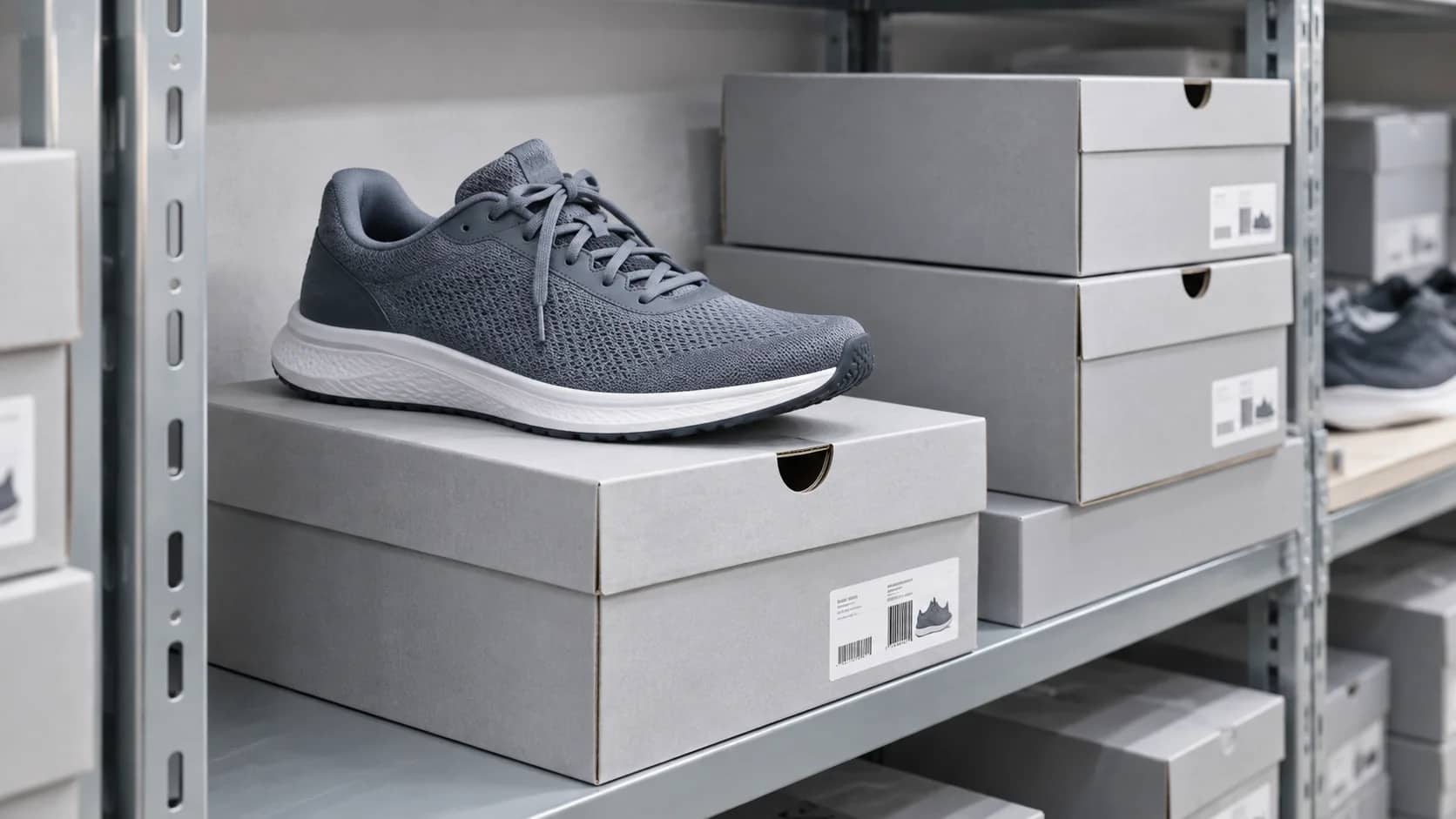
A SKU looks like a simple product code. In practice, it becomes one of the main ways a business counts stock, separates variants, connects sales channels, and gives software a stable handle for each sellable item. A good SKU system keeps inventory work clean today and makes product data easier for search, feeds, and AI shopping systems to read tomorrow.
What is a SKU?
SKU stands for stock keeping unit. A SKU is a unique internal code a business assigns to a product or product variant so it can track, sell, replenish, pick, pack, report on, and publish that item.
The word is usually pronounced "skew," though some teams say the letters S-K-U. People also say "SKU number," even when the code includes letters.
A SKU is internal to your business. Two retailers can sell the same water bottle and give it different SKUs. A UPC or GTIN, by contrast, is meant to identify the trade item across companies through a standards system such as GS1's GTIN standard.
The most important rule is granularity. If a variant is stocked, priced, picked, shipped, returned, or reported separately, it usually needs its own SKU.
| Product | Variant | Example SKU |
|---|---|---|
| Cotton crewneck T-shirt | Black, medium | TEE-CRW-BLK-M |
| Cotton crewneck T-shirt | Black, large | TEE-CRW-BLK-L |
| Cotton crewneck T-shirt | White, medium | TEE-CRW-WHT-M |
| Ceramic table lamp | Blue, US plug | LMP-CER-BLU-US |
| Ceramic table lamp | Blue, EU plug | LMP-CER-BLU-EU |
That separation matters because the black medium T-shirt and black large T-shirt can have different stock levels, return rates, reorder points, and demand patterns.
What a SKU does
A SKU gives teams and systems a shared product identity. The code may appear on shelf labels, pick lists, packing slips, point-of-sale systems, ecommerce platforms, product feeds, analytics reports, and internal databases.
| Job | How the SKU helps |
|---|---|
| Inventory tracking | Counts stock by exact item or variant |
| Replenishment | Shows which item needs to be reordered |
| Fulfillment | Helps warehouse teams pick and pack the right product |
| Sales reporting | Separates demand by color, size, pack, region, or model |
| Returns | Connects returned units to the right variant and reason codes |
| Channel publishing | Maps one product record into marketplaces, feeds, and ads |
| Product data quality | Gives each record a stable key for enrichment, validation, and syncing |
We treat SKU as one identity field inside a larger product data layer. The SKU is useful. It cannot carry the whole truth about a product. The complete record also needs brand, title, GTIN, MPN, variant relationships, price, availability, attributes, images, policies, and provenance.
That wider context is what helps a product show up correctly in product feeds, structured data, search results, recommendations, and AI shopping surfaces. Our work on product data enrichment starts with stable identifiers, then adds the attributes and relationships machines need to understand what a product actually is.
SKU example: how to read one
A useful SKU is short enough for people to work with and structured enough for systems to parse consistently.
Take this example:
LMP-ARC-BR-110V
| Segment | Meaning |
|---|---|
| LMP | Category: lamp |
| ARC | Product family or style: arc lamp |
| BR | Finish: brass |
| 110V | Electrical version: US voltage |
This SKU tells an operations team enough to recognize the item without opening the full record. It does not try to include every product fact. The product record should store the full title, material, dimensions, bulb type, price, availability, images, shipping class, and compatibility fields.
That distinction prevents a common mistake. A SKU should identify the item. It should not become a compressed product description.
SKU vs UPC, barcode, GTIN, MPN, and serial number
SKU confusion usually comes from mixing internal identifiers, global identifiers, and scannable labels. They work together. They answer different questions.
| Term | What it means | Who controls it | Best use |
|---|---|---|---|
| SKU | Internal stock keeping unit for one product or variant | The seller, retailer, distributor, or brand | Inventory, fulfillment, reporting, internal product records |
| UPC | A common barcode identifier in North America, based on GTIN-12 | GS1 through licensed company prefixes | Retail scanning and cross-seller product identification |
| GTIN | Global Trade Item Number, the broader global identifier family | GS1 | Product matching across retailers, marketplaces, ads, and data partners |
| Barcode | A machine-scannable representation of a code | Depends on the code encoded | Fast scanning at checkout, warehouse, or receiving |
| MPN | Manufacturer part number | The manufacturer | Manufacturer-specific product or replacement part identification |
| Model number | A model, family, or design identifier | The manufacturer or brand | Grouping related items, especially electronics, appliances, parts, and equipment |
| Serial number | Unique identifier for one physical unit | The manufacturer, brand, or service system | Warranty, service, fraud prevention, repair, and traceability |
| Item group ID | A shared parent identifier for variants in some feeds | The merchant or platform | Grouping color, size, material, pack, or pattern variants |
Schema.org defines sku as a merchant-specific identifier in its Product vocabulary. Google product structured data also supports product identifiers such as SKU, GTIN, MPN, and brand through its Product documentation. For merchant feeds, Google's product data spec separates an item's id from fields such as gtin, mpn, brand, and item_group_id.
The operating rule is simple. Use SKUs for your own product operations. Use GTINs or UPCs when a channel needs standardized product matching. Use serial numbers when you need to track one physical unit after it leaves inventory.
How SKUs work with product variants
Variants are where SKU systems usually break.
A parent product is the product family shoppers understand, such as "cotton crewneck T-shirt." A variant is the exact option a shopper can buy, such as "black, medium." Ecommerce teams often need both:
- Parent product ID: groups related variants together.
- Variant SKU: identifies the exact item stocked and sold.
- GTIN or UPC: identifies the trade item when a global identifier exists.
- Channel IDs: map the same record into specific marketplaces, feeds, and ads platforms.
Google's variant guidance uses variant relationships so search systems can understand which offers belong together. The same logic applies inside a merchant's own catalog. If every size and color is treated as an unrelated standalone product, systems lose the relationship. If every variant shares one SKU, operations lose the difference.
For ecommerce, these cases need special care:
| Case | Recommended SKU treatment |
|---|---|
| Size or color variants | Give each stocked variant its own SKU and connect all variants to one parent product |
| Regional versions | Use separate SKUs when voltage, compliance, plug, language, packaging, or assortment differs |
| Multipacks | Use a separate SKU when the pack is sold, priced, picked, or replenished as a distinct item |
| Bundles and kits | Use a bundle SKU for the sellable bundle, while preserving the component SKUs underneath |
| Replacement parts | Use SKUs that map cleanly to MPNs, compatibility data, and fitment rules |
| Custom products | Use a base SKU plus structured configuration data, or generate a unique SKU for each build when operations require it |
Good variant structure makes product data more useful for people and machines. It helps warehouse teams ship the right unit, analytics teams read demand correctly, and AI shopping systems tell the difference between similar products.
Where SKUs fit in a product data layer
A SKU is one field in the product identity layer. It should connect to every downstream system that needs to know which item it is dealing with.
A practical product data layer keeps the SKU beside the other identifiers, attributes, and channel IDs that describe the same item.
| Product data layer | What the SKU connects |
|---|---|
| Product record | Parent product, variant attributes, title, brand, images, price, and availability |
| Operations | ERP records, inventory counts, replenishment rules, pick lists, and returns |
| Commerce channels | Storefront pages, marketplaces, retail media, ads, and product feeds |
| Machine-readable data | Structured data, API objects, feed IDs, and AI shopping surfaces |
This is where many teams outgrow a simple spreadsheet. A SKU may be clean in the ecommerce platform, different in the ERP, missing from a marketplace export, and duplicated in an old feed. The result is product data drift. Inventory, pages, ads, feeds, analytics, and AI systems stop referring to the same item with the same facts.
We help brands solve that identity problem at the product data layer. We normalize product records, enrich missing attributes, resolve variants, and publish machine-readable data so the same product facts can support storefronts, product feeds, structured data, APIs, and AI shopping systems.
How to create SKU numbers
A strong SKU system is documented before it is generated. Use these rules before creating codes in bulk.
1. Define what deserves its own SKU
Start with the operational question: what do you stock separately?
Create separate SKUs for items that differ in inventory, price, fulfillment, supplier, reorder logic, shipping rules, compliance, warranty, or returns handling. Do not create separate SKUs only because marketing copy changes.
2. Choose a short set of code segments
Most SKU systems use a few stable segments. Common choices include:
- category or department;
- product family or style;
- material, color, size, flavor, shade, scent, or finish;
- pack count or bundle type;
- region, voltage, language, or compliance version;
- supplier or collection when it is operationally useful.
Keep the structure short. A SKU such as TEE-CRW-BLK-M is easier to use than APPAREL-TSHIRT-CREWNECK-COTTON-BLACK-MEDIUM-CORE-2026.
3. Use controlled abbreviations
Create a code list for common values.
| Attribute | Better code examples | Avoid |
|---|---|---|
| Color | BLK, WHT, NVY, GRN | B, DARKBLUE, GREENISH |
| Size | XS, S, M, L, XL | 1, 2, 3 if teams also use numeric size labels |
| Region | US, EU, UK, CA | INTL when region-specific rules matter |
| Pack | 1PK, 2PK, 6PK | MULTI if pack count affects inventory |
| Voltage | 110V, 220V | US if voltage and market can diverge |
Avoid characters that cause scanning, typing, or spreadsheet issues. Hyphens are easier to read than spaces. All caps are easier to scan. Avoid ambiguous pairs such as O and 0, I and 1, or S and 5 when teams read codes aloud.
4. Keep SKUs stable
A SKU should not change because the product goes on sale, moves to a new campaign, or gets a new homepage description. Price, stock status, season, and promotion belong in fields that can update without changing the identifier.
When a product is discontinued, retire the SKU. Do not reuse it for a new product. Reuse breaks reporting history and can cause returns, warranty claims, and marketplace records to point to the wrong item.
5. Separate the SKU from external identifiers
Do not rely on UPCs, GTINs, or supplier part numbers as your only SKU system unless they match how you operate. You may sell a bundle made from multiple GTIN-bearing products. You may need separate regional SKUs for the same design. You may also sell private-label items where you control both internal and external identifiers.
A cleaner model stores all relevant identifiers together:
| Field | Example |
|---|---|
| Internal variant ID | var_482019 |
| SKU | LMP-ARC-BR-110V |
| GTIN | 00815587001234 |
| MPN | ARC-BR-110 |
| Parent product ID | LMP-ARC |
| Channel ID | google-us-482019 |
This gives every system the identifier it needs without forcing one code to do every job.
6. Document ownership
SKU rules fail when no one owns them. Document who creates SKUs, which system is the source of truth, which fields are encoded, which fields are separate attributes, how retired SKUs are handled, and how channel-specific aliases are mapped.
For a small catalog, that may be a one-page rulebook. For a large catalog, it should be part of product data governance and product data quality workflows.
SKU examples by product type
Different categories need different SKU patterns. The right structure reflects operational differences, not a universal template.
| Category | Example SKU | What the SKU captures |
|---|---|---|
| Apparel | TEE-CRW-BLK-M | Product type, style, color, size |
| Footwear | SHOE-RUN-NVY-10M | Product type, style, color, size and width |
| Beauty | LIP-MAT-RSE-3ML | Product type, finish, shade, size |
| Furniture | CHR-OAK-NAT-SET2 | Product type, material, finish, pack |
| Lighting | LMP-ARC-BR-110V | Product type, style, finish, electrical version |
| Food | COF-BLD1-WB-12OZ | Product type, blend, grind or whole bean, size |
| Replacement parts | FLT-HVAC-M8-2PK | Part type, compatibility or model, pack |
| Bundle | KIT-BED-QN-WHT-4PC | Kit type, size, color, component count |
The best SKU is the shortest code that reliably separates the item for the way the business sells and operates.
Common SKU mistakes
Reusing a SKU after a product is retired
Reusing SKUs corrupts history. Old sales, returns, inventory counts, support tickets, and channel records can attach to the new product. Retire old SKUs and create new ones for new products.
Encoding volatile facts
Do not put price, stock level, sale status, campaign name, or warehouse location into the SKU. Those facts change too often. Store them as separate fields.
Using one SKU for multiple stocked variants
One SKU for every size or color may feel simpler. It hides stockouts and demand differences. If variants are stocked separately, they need separate SKUs.
Treating the SKU as the only identifier
A SKU does not replace GTIN, MPN, parent product ID, serial number, channel ID, or internal database ID. Those identifiers answer different questions.
Hiding product attributes inside the SKU only
A SKU such as TEE-CRW-BLK-M is useful because humans can read it. Search systems, filters, product feeds, and AI shopping systems still need color and size stored as structured attributes. Do not expect software to infer the whole product record from a code.
Letting channels invent their own codes
Marketplaces, ads systems, retail partners, and fulfillment tools may create destination-specific IDs. Keep those aliases mapped to the canonical SKU and product record. Otherwise each channel becomes a separate product truth.
SKU FAQ
Is SKU the same as a barcode?
No. A SKU is the internal code. A barcode is a scannable representation of a code. A barcode can encode a SKU for internal warehouse use, or it can encode a UPC or GTIN for retail scanning.
Is SKU the same as UPC?
No. A SKU is created by the merchant or business for internal use. A UPC is a standardized product identifier used in retail scanning and product matching. The same product can have one UPC and different SKUs at different retailers.
How do I find the SKU of a product?
Look in the ecommerce platform, inventory system, POS, ERP, product feed, shelf label, pick list, packing slip, or product record. On consumer product packaging, the visible barcode is often a UPC or GTIN rather than the merchant's internal SKU.
Can two products have the same SKU?
Inside one business, no. A SKU should identify one sellable product or variant. Across different businesses, yes. SKUs are internal, so two sellers can use the same code for different products.
How long should a SKU be?
Most teams do best with short SKUs that are easy to read, type, scan, and print. A practical range is often 8 to 16 characters excluding separators. Clarity matters more than a fixed length.
Should SKUs be visible to customers?
They can be, especially for B2B, replacement parts, wholesale, support, and reordering use cases. Consumer brands may hide SKUs from the main product page while still using them in structured data, feeds, support systems, and packing workflows.
Do digital products need SKUs?
They can. A digital product, subscription, license, plan, or service package may need an internal product code for pricing, billing, reporting, fulfillment, entitlement, or support. It may not need physical inventory logic. It still benefits from clear product identity.
A SKU problem is often a product data problem. If your products, variants, feeds, and AI shopping surfaces need one source of truth, book a demo to see how we structure, enrich, and publish product data for AI commerce.
