
AI shopping assistant: what it is, how it works, and how brands should prepare
A practical guide to AI shopping assistants, product data readiness, and the hidden measurement problem brands need to plan for.
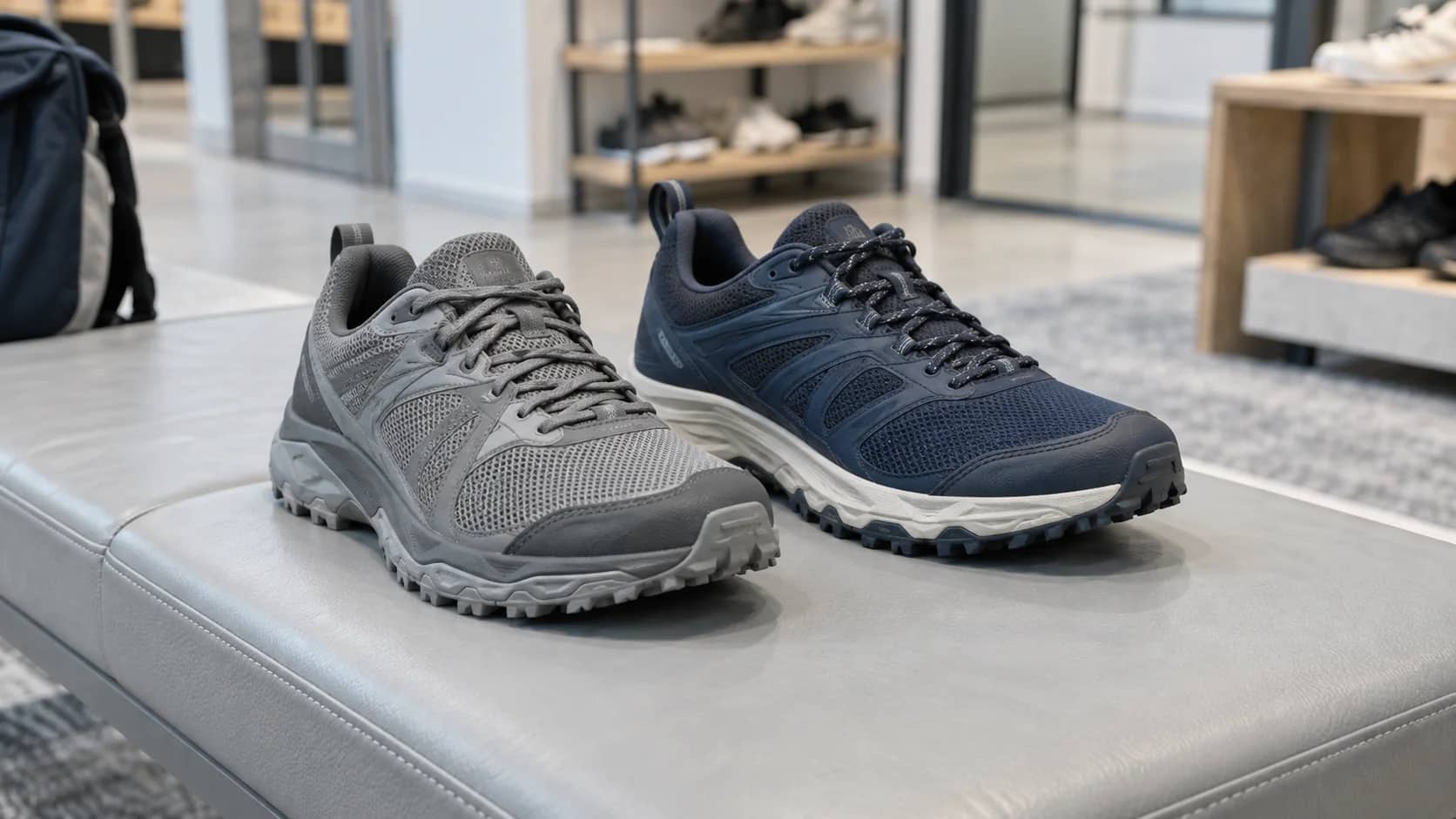
An AI shopping assistant is software that helps a shopper describe what they need, compare products, and move toward a product page or purchase through a conversational interface. Instead of typing a short keyword like "running shoes," a shopper can ask for "trail running shoes under $150 for wide feet that can handle wet roads" and expect the assistant to narrow the options.
That makes the assistant useful to shoppers, but it also changes the job for brands. The assistant can only recommend products it can understand. If your product data is thin, inconsistent, out of date, or trapped inside a page layout that machines cannot parse cleanly, the assistant has less to work with.
There is a measurement problem too. AI shopping assistants and answer engines can send high-intent shoppers directly to product detail pages, but that traffic may not always arrive with a clean referrer. In analytics, some of those visits can look like Direct traffic rather than AI-referred traffic. Brands that only watch obvious referral reports may undercount the channel while product-level demand is already moving.
What is an AI shopping assistant?
An AI shopping assistant is a conversational system that helps shoppers make product decisions. It can interpret a need, ask follow-up questions, retrieve product options, compare those options, and explain why a specific product fits.
There are two common types:
- External AI shopping assistants. These live in answer engines, marketplaces, search experiences, or AI apps. Examples include ChatGPT Shopping, Amazon Rufus, Perplexity Shopping, and AI shopping experiences inside larger platforms.
- Onsite AI shopping assistants. These live on a retailer or brand's own site. They act more like a store associate: answering questions, recommending products, explaining fit, and helping shoppers navigate a catalog.
The two categories are starting to overlap. A shopper may research a product in an external assistant, click into a product detail page, then expect the brand site to continue the same level of help. This is one practical expression of broader agentic commerce. For a brand, the common requirement is the same: the product data has to be complete, current, and readable.
AI shopping assistant vs. chatbot vs. recommendation engine
The terms are often used loosely, but they are not the same thing.
| System | What it mainly does | What it needs from your catalog |
|---|---|---|
| Basic chatbot | Answers predefined questions or routes support requests | Help content, order data, policy answers |
| Recommendation engine | Suggests products based on behavior, rules, or similarity | Product attributes, categories, behavioral data, inventory |
| AI shopping assistant | Understands a shopper's goal, compares options, explains tradeoffs, and helps the shopper act | Structured product facts, variants, price, availability, policies, reviews, use cases, and trust signals |
A basic chatbot can tell a shopper your return policy. A recommendation engine can show "similar products." An AI-powered shopping assistant should be able to handle a messier request, such as: "I need a carry-on bag for a three-day work trip, under $250, that fits most US airline bins and has a laptop sleeve."
To answer that well, the assistant needs more than a product title and image. It needs dimensions, materials, airline-fit claims, laptop compartment details, price, stock, shipping timelines, reviews, and enough confidence that those facts are current.
How AI shopping assistants work
Different systems use different models and data sources, but most AI shopping assistants follow the same basic path.
- They interpret shopper intent. The assistant turns a natural-language request into product requirements: budget, category, size, style, occasion, compatibility, urgency, brand preferences, exclusions, and constraints.
- They retrieve candidate products. The system searches a product index, merchant feed, website, marketplace catalog, API, or broader web corpus for possible matches.
- They read product facts. The assistant looks for structured and unstructured product information: attributes, specs, variants, price, availability, shipping, returns, images, reviews, and comparisons.
- They rank and explain options. The assistant weighs which products best match the shopper's constraints and then explains the recommendation in plain language.
- They route the shopper. The assistant may send the shopper to a product detail page, add the item to a cart, start checkout, or hand the shopper to an onsite experience.
The important part is step three. Assistants do not recommend products because a brand says "best" in a headline. They recommend products when the product record contains facts the assistant can map to the shopper's request.
Examples of AI shopping assistants
AI shopping assistants now show up across several surfaces.
| Assistant type | Example | How shoppers use it |
|---|---|---|
| General answer engine shopping | ChatGPT Shopping, Perplexity Shopping | Ask for product ideas, compare options, filter by need, and click through to products |
| Marketplace assistant | Amazon Rufus | Ask questions inside a marketplace catalog, compare products, and get recommendations based on marketplace product data |
| Onsite ecommerce assistant | Retailer or brand-site assistant | Ask store-specific questions, get guided product discovery, and continue toward checkout |
| Vertical shopping agent | Category-specific or commerce-platform agent | Get recommendations in a narrower category, such as fashion, beauty, grocery, furniture, or B2B purchasing |
The shopper behavior is similar across all of them: people ask in full sentences. They include constraints that do not always map to traditional filters. They expect the assistant to know the difference between similar products and to explain the match.
That is why product data becomes a growth lever. If your product record does not include the facts shoppers ask about, the assistant has to infer, skip, or choose a competitor with clearer data.
Why product data decides whether assistants can recommend you
AI shopping assistants need a product data layer, not just a website. Your product pages still matter, but assistants also need product facts in a form they can retrieve, verify, and compare.
The highest-value product data usually falls into these buckets.
| Product data area | Why assistants need it | Examples |
|---|---|---|
| Core identity | To know what the product is and avoid duplicates | Brand, title, category, SKU, GTIN, MPN, canonical URL |
| Attributes and specs | To match natural-language needs | Material, size, color, fit, dimensions, capacity, compatibility, ingredients, use case |
| Variant relationships | To avoid comparing the wrong SKU | Size/color variants, bundles, refills, multi-packs, replacement parts |
| Commercial data | To recommend products shoppers can actually buy | Price, sale price, availability, inventory, shipping timing, return policy |
| Trust signals | To decide whether a recommendation is safe to surface | Reviews, ratings, warranty, certifications, provenance, editorial or merchant proof |
| Machine-readable distribution | To make the data accessible beyond the visible page | Product structured data, merchant feeds, clean APIs, channel-specific product feeds |
Google's product structured data guidance says product data can expose details such as price, availability, review ratings, and shipping information in richer search experiences. It also notes that using both page structured data and Merchant Center feeds can help Google understand and verify product data. That same logic applies more broadly to AI shopping: the clearer the product facts, the easier it is for machines to reason over them.
This is also why product data quality matters more in AI shopping than it did in a simple keyword search workflow. Missing attributes do not just create a bad back-office record. They remove the facts an assistant needs to match a shopper's request.
A weak product record might say:
"Commuter jacket. Lightweight. Available in black."
An assistant-ready product record is more useful:
"Women's waterproof commuter jacket. Recycled nylon shell, relaxed fit, taped seams, packable hood, reflective trim, sizes XS-XL, colors black/navy/olive, in stock, ships in two business days."
The second version gives an assistant actual match criteria. It can answer prompts about rain, commuting, sustainability, fit, size, visibility, and availability.
The hidden measurement problem: AI shopping visits can look like Direct traffic
AI shopping assistants do not only summarize products. They can send shoppers to product detail pages.
That creates a useful new path:
- A shopper asks an assistant for a product recommendation.
- The assistant compares options and names a product.
- The shopper clicks through to the product detail page.
- The shopper arrives with high intent because the assistant already handled part of the research.
But the visit may not always show up as an obvious AI referral.
Retailgentic calls this pattern Dark Agentic Commerce Traffic: answer engines and AI apps sending shoppers to product pages without clean referrer data or UTM tags. When that happens, analytics tools may classify the session as Direct even though the shopper came from an AI recommendation. This is the same measurement problem behind dark agentic commerce traffic: the assistant may create demand even when the analytics platform cannot see the source.
Retailgentic cites several datasets to argue that the undercount can be large, including a Loamly analysis of 446,405 tracked visits where 70.6% of AI-influenced traffic landed as Direct and only 29.4% carried a referrer. Treat that as a source-attributed benchmark, not a universal rule for every site. The practical point is still important: Direct product-page traffic is not always a pure "typed the URL" channel.
Visible AI referrals can also be high-intent. Search Engine Land reported a Visibility Labs analysis across 94 ecommerce sites where ChatGPT traffic converted at 1.81% versus 1.39% for non-branded organic search, a 31% lift. The sample still represented a small share of revenue, but it suggests that assistant-driven traffic can be closer to a qualified shopping handoff than a casual visit.
Brands should not relabel every Direct PDP session as AI traffic. Instead, use the DACT pattern as a measurement hypothesis:
- Did Direct traffic to product pages rise while visible AI referrals stayed low?
- Are those Direct PDP sessions landing deep in the catalog instead of on the homepage?
- Do they show stronger add-to-cart, checkout, or conversion behavior than ordinary Direct sessions?
- Do increases line up with product visibility inside ChatGPT, Perplexity, Gemini, Rufus, or other shopping assistants?
If the answer is yes, the assistant channel may be larger than standard referral reports suggest.
How brands should prepare for AI shopping assistants
Preparing for AI shopping assistants is not only an SEO task. It is a product data, merchandising, analytics, and distribution task.
1. Pick the products you want assistants to recommend
Start with the products that matter commercially:
- best sellers;
- high-margin products;
- products with strong reviews;
- products in categories where shoppers ask complex questions;
- products that already receive non-branded discovery traffic;
- products where AI assistants already mention competitors.
Do not try to fix every SKU at once. Start where recommendation quality would actually change revenue.
2. Build assistant-ready product records
For each priority product, write down the shopper questions the product should be able to answer.
For apparel, that might include fit, material, occasion, season, sizing, care, color, returns, and shipping. For electronics, it might include compatibility, dimensions, battery life, inputs, warranty, and replacement parts. For beauty, it might include ingredients, skin type, allergens, usage instructions, certifications, and shade matching.
Then compare those questions against the product record. If the answer only exists in an image, a long paragraph, a PDF, or a support article, make it explicit in structured product data.
This is where product data enrichment matters. Enrichment turns raw product content into machine-readable facts an assistant can compare.
3. Normalize variants, bundles, and identifiers
AI shopping assistants can make bad recommendations when variant logic is muddy.
A size variant is not the same thing as a bundle. A replacement part is not the same thing as the main product. A colorway with different availability should not be treated as a generic option if the shopper needs a specific color now.
Make sure each product record has stable identifiers and clear relationships:
- parent product;
- child variants;
- SKU;
- GTIN or MPN where available;
- color, size, pack, or configuration;
- bundle components;
- accessories and replacement parts.
Clean identifiers help assistants avoid duplicate products, stale listings, and mismatched recommendations.
4. Keep price, stock, shipping, and returns current
A shopping assistant loses trust quickly if it recommends unavailable products or outdated prices. Fresh commercial data matters because shoppers ask questions like:
- "What can arrive by Friday?"
- "Which option is under $100?"
- "Is this available in size 8?"
- "Can I return it if it does not fit?"
Your data layer needs to keep these facts synchronized across product pages, feeds, marketplaces, and AI-facing surfaces. A product data syndication workflow helps keep the same product facts current wherever a shopper or assistant finds them.
5. Publish data in machine-readable formats
AI shopping readiness is strongest when product facts are available in multiple reliable forms:
- product structured data on the page;
- merchant feeds where relevant;
- clean product APIs for partners and builders;
- accurate sitemaps and canonical URLs;
- consistent product information across marketplaces, retail media, affiliates, and shopping surfaces.
For developers building AI shopping experiences, structured product data can be more useful than scraped HTML. Catalog provides full product objects, variant-level price and stock, normalized specs, images, and stable product data that agents can build on.
6. Add proof the assistant can trust
Assistants need more than product claims. They need signals that make a recommendation defensible.
Useful proof includes:
- verified reviews and ratings;
- return and warranty policies;
- shipping timelines;
- ingredient, material, or certification details;
- compatibility charts;
- comparison data;
- customer-fit notes;
- provenance or sourcing information;
- expert or editorial context when it is real.
Do not bury this information in vague marketing copy. Put it where the product record, page, and feeds can expose it clearly.
7. Measure visible AI referrals and dark PDP patterns
Track obvious AI referrals from ChatGPT, Perplexity, Gemini, Claude, Copilot, and other assistants when referrers are available. Then build a separate view for possible dark assistant traffic.
A practical baseline can include:
- Direct sessions landing directly on product detail pages;
- Direct PDP sessions with strong engagement or conversion;
- branded organic sessions landing on specific PDPs after assistant visibility improves;
- product-level lifts that coincide with AI visibility checks;
- differences between desktop web referrals and mobile/app-driven behavior.
The goal is not perfect attribution. The goal is to avoid dismissing AI shopping because the clean referral number looks small.
8. Monitor product-level AI visibility
Classic rankings are not enough. Brands should also test whether assistants can answer product prompts accurately.
For example:
- "What is the best waterproof commuter jacket for rainy cities?"
- "Which of these products has the safest ingredients for sensitive skin?"
- "What is a good budget alternative to [competitor product]?"
- "Which products from [brand] are in stock under $150?"
Track whether your brand appears, which product gets mentioned, what claims the assistant makes, which pages it cites or links to, and whether the answer is accurate. For deeper channel-specific preparation, start with how to improve ChatGPT product visibility. If the assistant names the wrong product, misses a key SKU, or invents a claim, the fix may be a product data problem before it is a content problem.
Where Catalog fits
Catalog is built for the product data layer behind AI commerce. For brands, that means turning catalog data into a cleaner, richer, AI-ready representation that assistants can read, trust, and route shoppers toward. For developers, it means using normalized product objects instead of brittle scraping or shallow search snippets.
If you are preparing for AI shopping assistants, the immediate work is not to chase every new interface. It is to make your products legible across the interfaces that already exist.
That starts with structured product facts, clean variants, current commercial data, and measurement that can see beyond obvious referral reports.
FAQ
Are AI shopping assistants the same as AI shopping agents?
They overlap. "AI shopping assistant" usually describes the user-facing experience that helps a shopper discover, compare, and choose products. "AI shopping agent" often implies more autonomy, such as taking actions, monitoring options, building carts, or completing parts of the purchase flow. In practice, many people use the terms interchangeably.
Do AI shopping assistants replace ecommerce site search?
No. They change what shoppers expect from product discovery. Site search still matters, especially on your own site. But assistants can handle longer, messier, more contextual requests. The strongest commerce experiences will connect search, recommendations, product data, and conversational help instead of treating them as separate systems.
What product data does an AI shopping assistant need?
At minimum, it needs product identity, category, attributes, specs, variants, price, availability, images, shipping, returns, and reviews or trust signals. The more specific the shopper's request, the more specific the data needs to be. A generic product title and short description are usually not enough.
How can I tell if AI shopping assistants are sending traffic to my site?
Start with visible referral traffic from AI tools, then look for possible dark traffic patterns: Direct sessions landing deep on product pages, high-intent PDP behavior, branded organic visits to specific products, and product-level lifts that line up with improved assistant visibility. Do not treat every Direct visit as AI traffic, but do not assume AI traffic is limited to clean referrers either.
Should brands build their own AI shopping assistant or optimize for external assistants first?
Most brands should do the product data work first. Clean product data improves onsite assistants, external answer engines, marketplaces, feeds, search, recommendations, and analytics. Once the data layer is strong, it is easier to decide whether to build an onsite assistant, partner with a platform, or focus on external AI shopping visibility.
